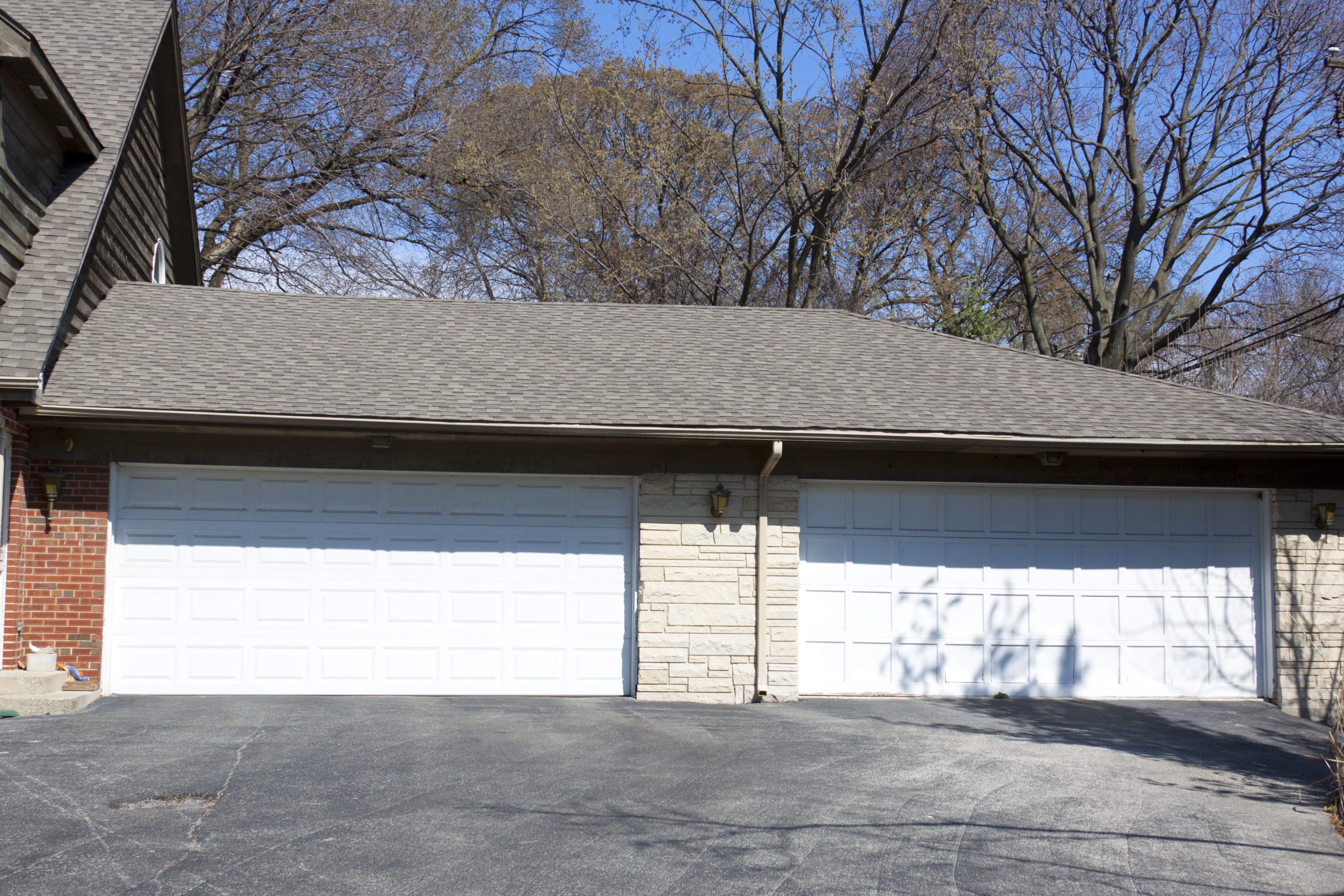
Winter is when garage door systems reveal their weakest points. Cold air alters material behavior, moisture seeps into moving parts, and repeated freeze-thaw cycles expose wear that often went unnoticed through summer and fall. At Wm. Haws Overhead Garage Doors, we see this pattern every year, especially once overnight temperatures drop, and doors are forced to work harder under less forgiving conditions. Garage door repair during winter is rarely about one isolated failure. It is usually the result of several small stresses compounding at the same time.
Homes across Ontario face similar seasonal pressures, but the impact varies based on door age, insulation, and maintenance history. In this article, we explain the most common cold-weather challenges, why they occur, and how homeowners can reduce winter-related damage.
Key Takeaways
- Cold temperatures change how garage door materials behave, increasing friction, tightening tolerances, and exposing existing wear that may not be noticeable in warmer months.
- Springs, cables, and weather seals are the most vulnerable components during winter due to brittleness, moisture exposure, and repeated freeze-thaw cycles.
- Many winter-related failures escalate quickly because homeowners attempt to operate doors that are frozen, misaligned, or under excessive strain.
- Opener systems and safety sensors are more likely to malfunction in freezing conditions, often due to thickened lubricants, snow buildup, or environmental interference.
- Preventative inspections and seasonal adjustments before winter significantly reduce the likelihood of sudden access issues, safety risks, and costly mid-season breakdowns.
How Cold Temperatures Change Door Performance
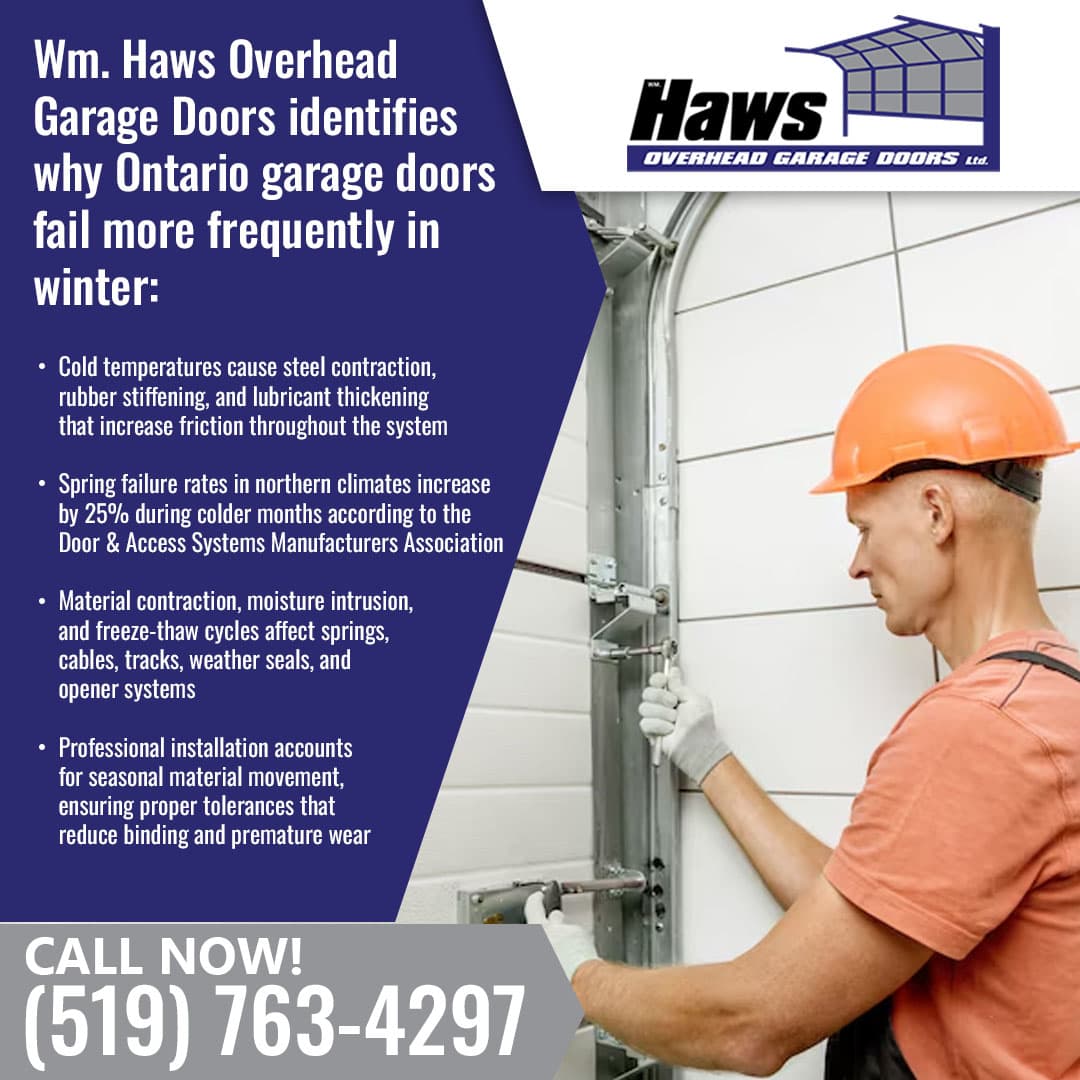
Cold weather affects garage doors at a mechanical level. Materials contract, friction increases, and tolerances tighten across the system. These shifts explain why doors that moved smoothly in October may struggle by January.
Material Contraction and Track Stress
Steel doors and tracks shrink slightly as temperatures fall. While the change seems minor, even small contractions can disrupt alignment that was already borderline. Rollers may bind, tracks can pinch, and the opener is forced to compensate with added force. Across garage door repair in Ontario, winter alignment issues are one of the most consistent service triggers observed by our team at Wm. Haws Overhead Garage Doors.
According to Valtonen et al. (2019), sub-zero temperatures can measurably increase the hardness and strength of steels, but at the same time critically impair their ability to deform plastically. This dual effect, higher mechanical resistance coupled with reduced ductility, illustrates how exterior metal systems exposed to extreme cold may appear stronger but are also more prone to brittle failure and wear. That resistance translates directly into strain on rollers, hinges, and opener components.
Weather Seals Losing Flexibility
Rubber bottom seals and perimeter weather stripping harden in cold air. Once flexibility is lost, gaps form that allow snow and moisture into the garage. That moisture often refreezes overnight, worsening binding issues the next morning. Over time, repeated freezing accelerates cracking and tearing, pushing homeowners toward professional garage door repairs rather than simple seal replacements.
Spring and Cable Failures During Winter Months
Springs and lift cables operate under constant tension, which makes them especially vulnerable when temperatures drop. Winter does not cause these components to fail on its own, but it accelerates existing fatigue.
Why Springs Break More Often in Cold Weather
As steel becomes more brittle in low temperatures, torsion and extension springs lose some elasticity. This is why so many calls for garage door repair in Guelph, Ontario, involve broken springs early in the morning when the door refuses to open.
Once a spring fails, the door becomes unsafe to operate manually. Attempting to force it can damage panels, tracks, or the opener itself, turning a single-component failure into a broader repair situation.
Cable Wear Accelerated by Moisture
Lift cables are exposed to moisture, road salt, and condensation. During winter, these elements combine with freezing temperatures to speed up corrosion. Ice buildup between cable strands weakens them internally, often without obvious warning. When a cable finally gives way, the door can jam at an angle, requiring emergency garage door repair to stabilize it safely.
Opener and Sensor Issues in Freezing Conditions
Modern garage door openers rely on both mechanical and electronic components, both of which respond poorly to extreme cold when not properly maintained.
Cold-Thickened Lubrication
Lubricants inside opener gear assemblies thicken as temperatures fall. This forces motors to work harder, which can cause delayed opening, incomplete travel, or automatic reversal. In unheated garages, this issue accounts for a significant portion of winter service calls related to garage door repair in Ontario.
Over time, added strain shortens motor lifespan and increases wear on internal gears. Cold-rated lubrication and seasonal adjustments often resolve these issues before replacement becomes necessary.
Sensor Interference From Snow and Ice
Safety sensors mounted near the floor are easily disrupted in winter. Snowbanks, ice buildup, and even reflected glare from packed snow can interrupt the photo-eye beam. Homeowners frequently assume the opener has failed when the issue is environmental. These situations are common precursors to emergency garage door repair calls, even though the fix is often straightforward once conditions are addressed.
Winter Emergencies Caused by Sudden Door Failure
Cold-weather failures tend to happen quickly and without much warning. When they do, access and safety concerns escalate fast.
Doors Frozen to the Ground
A frequent winter scenario involves the bottom seal freezing to the driveway overnight. When the opener attempts to lift the door, the added resistance can strip gears, bend panels, or burn out motors. Many emergency garage door repair services in Guelph stem from this exact chain of events.
Trying to force the door open rarely ends well. Once damage spreads beyond the seal, the repair scope and cost increase significantly.
Security and Heat Loss Risks
A door stuck open during winter creates immediate security concerns and allows heated air to escape rapidly. A door stuck closed can trap vehicles inside during critical moments. In both cases, emergency garage door repair becomes about restoring safety and access, not just convenience. Winter conditions leave little margin for delay.
Preventative Steps That Reduce Cold-Weather Failures
While winter damage cannot be eliminated entirely, preparation makes a measurable difference. Most cold-related failures we see were preceded by smaller warning signs.
Pre-Winter Mechanical Inspections
A fall inspection allows worn springs, cables, rollers, and hinges to be addressed before cold stress peaks. This proactive approach reduces the likelihood of mid-winter breakdowns that require professional garage door repairs under urgent conditions. Homes that schedule preventative service tend to experience fewer disruptions when temperatures drop sharply.
Insulation and Seasonal Adjustments
Insulating the garage space stabilizes temperature swings and reduces condensation. Applying cold-rated lubricants to moving parts also maintains smoother operation. These measures lower the risk of sudden failures that otherwise lead to emergency garage door repair during extended cold snaps.
What We See Each Winter in Local Homes
At Wm. Haws Overhead Garage Doors, winter patterns repeat consistently. Early cold brings minor operational complaints, while late winter produces more component failures. Many homeowners postponed addressing noise or hesitation earlier in the year, only to see those issues escalate once the deep cold set in.
In neighborhoods throughout Guelph, Ontario, older doors with original hardware are particularly susceptible. By contrast, homes that receive seasonal maintenance often make it through winter with minimal intervention. This contrast reinforces the value of preparation over reaction.
Our experience across Ontario communities shows that winter-related problems are rarely random. They follow predictable mechanical responses to cold, moisture, and increased strain.
Contact Wm. Haws Overhead Garage Doors Today
Cold weather places garage door systems under conditions they were not designed to handle indefinitely without care. Material contraction, brittle springs, moisture exposure, and electronic sensitivity all contribute to winter failures. Understanding these factors helps homeowners recognize early warning signs and respond before damage escalates.
At Wm. Haws Overhead Garage Doors, we focus on helping homeowners navigate winter challenges with practical insight and timely service. Addressing concerns early, preparing systems for seasonal stress, and avoiding forced operation during freezing conditions all play a role in keeping garage doors reliable through Ontario winters. To learn more, contact us today at (519) 763-4297 or wmhawsdoors@bellnet.ca.