At Wm. Haws Overhead Garage Doors, we’ve helped homeowners for decades, and one thing we see often is how little attention garage door springs receive, until something suddenly goes wrong. While most people think of openers or panels when doors malfunction, spring issues are among the most common reasons for calling us for garage door repair. A weakened or broken spring can quickly become a safety hazard because of the immense tension these components hold.
In this guide, we want to share what we’ve learned from working on thousands of systems throughout Guelph, Ontario. You’ll understand how springs work, what warning signs matter the most, and how to stay safe if a sudden failure happens. Our goal is to give homeowners clear, practical information that keeps their garage door operating safely in every season.
Key Takeaways
- Garage door springs do most of the lifting, and their failure can create sudden safety hazards, especially in fluctuating temperatures.
- Early warning signs matter, including uneven door movement, loud snaps, visible spring gaps, or a door that suddenly feels heavier or strains the opener.
- DIY spring repairs are extremely dangerous. High-tension components should only be handled by trained technicians with the proper tools and safety protocols.
- Regular inspections extend system lifespan, especially when homeowners follow seasonal maintenance habits such as lubrication, balance checks, and monitoring for unusual noises.
- Professional service from Wm. Haws Overhead Garage Doors guarantees safe, accurate spring replacement and long-term reliability for homeowners across Guelph, Ontario.
Why Garage Door Springs Matter More Than Most Homeowners Realize
At Wm. Haws Overhead Garage Doors, we’ve worked with thousands of systems throughout Guelph, Ontario, and one thing we consistently see is how much homeowners underestimate the role that springs play in everyday operation. The NCHC Journal of Undergraduate Research and Creative Activity notes that opening a garage door may feel effortless. Still, the mechanics behind spring tension and lifting force are far more complex than most people realize. That insight aligns closely with what we encounter in the field every day.
A typical residential door can weigh well over one hundred pounds, and without properly functioning springs, the opener alone cannot lift that weight safely. Springs absorb and release enormous tension with every cycle, acting as the primary counterbalance system. Here in Guelph, Ontario, where seasonal temperature shifts put extra stress on metal components, springs tend to weaken faster than homeowners expect. When they do, the entire overhead system becomes harder to operate and less predictable. Recognizing how essential these components are helps prevent avoidable safety risks and costly repairs.
The Hidden Forces Behind Every Opening and Closing Cycle
Every time your garage door moves, the springs absorb and release energy. Torsion springs twist tightly above the door, while extension springs stretch along the tracks. Most systems are designed for roughly 10,000 cycles. In a busy household, that can translate to only five to seven years before natural wear becomes noticeable.
We often get calls early in the winter when springs begin to contract sharply. Homeowners report hearing a loud snap, noticing the door suddenly feels heavier, or watching it lift unevenly. These symptoms show just how much force these springs carry. Even when they seem small or simple, the energy stored inside them is significant. Once we explain this to homeowners, they quickly understand why spring maintenance matters just as much as opener repairs or cable replacements.
The Different Types of Garage Door Springs and Their Risks
We encounter two main types of spring systems: torsion and extension. Both are effective, but each comes with unique safety considerations. Knowing which system your home uses helps you spot issues earlier and understand what kind of maintenance schedule might be best.
Torsion springs are now the preferred option for most modern installations we complete at Wm. Haws Overhead Garage Doors. They offer smoother operation, better weight distribution, and greater reliability in colder climates.
Extension springs are still common in older homes, but they require additional safety features to handle failure properly. Awareness of these differences empowers homeowners to make learned decisions when scheduling service or upgrades.
Torsion Springs: The Standard for Modern Homes
We install torsion systems in both new and replacement setups because they provide the most consistent performance over time. Mounted above the door, torsion springs twist to store energy and then unwind to help lift the door. This action distributes weight more evenly, reducing stress on the tracks, opener, and cables.
Guelph, Ontario’s cold winters can be tough on metal components, but torsion springs generally handle these fluctuations better than extension springs. When homeowners call us because their door feels unusually heavy or the opener begins straining, torsion fatigue is often the cause. In those cases, we check for rust, gaps in the coils, and any signs of torsion bar wear. Although torsion springs last longer, they still require timely replacement. When maintained properly, they offer excellent reliability and smooth operation all year round.
Extension Springs: Common but Riskier When Worn
Extension springs run alongside the horizontal tracks and work by stretching and contracting. They’re often found in older homes, and while they function well when maintained correctly, they do present additional safety risks. For example, if an extension spring breaks and doesn’t have a safety cable installed, it can snap with considerable force.
We’ve responded to many service calls where a homeowner notices the door lifting unevenly or jerking during operation. This usually means one extension spring is failing faster than the other. Winter moisture accelerates rust, and once corrosion sets in, the spring’s structural integrity weakens quickly. While we can service these systems effectively, we often recommend upgrading to torsion springs for improved safety and long-term reliability.
Early Warning Signs Homeowners Should Never Ignore
In our experience, most spring problems show early symptoms before becoming full failures. Unfortunately, homeowners often overlook these signs until the door stops moving entirely. Being aware of common indicators helps you catch issues sooner and avoid more expensive repairs.
The most common issues include unusual noises, difficulty in lifting the door manually, visible gaps in the springs, and uneven door movement. When these symptoms appear, it usually means the tension in the system is no longer balanced. Ignoring the early signals forces the opener and cables to work harder, increasing the risk of unexpected failure.
Visible Damage and Operational Changes That Signal Immediate Danger
One of the first things we advise homeowners to watch for is visual separation in a torsion spring. If you see a clear break in the coil, that’s a sign the spring has already failed. Another red flag is an extension spring that appears elongated or has distorted hooks. These changes mean the spring is no longer managing tension effectively.
Operational symptoms are equally important. A door that lifts only on one side, drops too quickly, or refuses to stay open is showing clear signs of a spring issue. We often see this happen during cold spells, when metal fatigue accelerates. If you experience a loud snapping sound from the garage, stop using the door immediately. Spring failures can cause sudden, hazardous movement that should only be handled by trained technicians.
Safety Precautions Every Homeowner Should Follow
Because springs store so much tension, working with them can be dangerous without proper tools and training. We strongly discourage homeowners from attempting DIY adjustments or replacements. While online tutorials can make the process look simple, the real risk becomes clear when you realize how much force the springs hold. Even a small miscalculation can cause significant injury.
Seasonal changes also influence safety. We see frequent calls in winter when the springs become brittle and more prone to snapping. It’s essential to take spring-related symptoms seriously, especially during the colder months. Scheduling garage door repair in Guelph, Ontario, early can prevent sudden issues that leave your car trapped or your home exposed.
Steps to Make Your Garage Door Safer Year-Round
Several simple habits can help keep your garage door safer. We recommend checking how smoothly the door moves and whether it stays balanced when opened halfway. A balanced door indicates proper tension, while one that drifts or drops too quickly may require service.
Winterizing your garage door is also beneficial. Lubricating the moving parts, monitoring weather stripping, and ensuring your cables are in good condition all contribute to a longer spring lifespan. Listening for new noises is one of the easiest ways to catch early issues. If you hear grinding, popping, or straining, give us a call at Wm. Haws Overhead Garage Doors, so we can assess the system safely and professionally.
When Spring Failure Becomes an Emergency Situation
When springs fail suddenly, homeowners often find themselves stuck with a door that won’t open or close. This can be particularly frustrating during winter when the weather adds extra urgency. These situations often require emergency garage door repair, especially if the door is jammed mid-cycle or poses a safety hazard.
Sudden spring failures can cause cables to unwind, tracks to misalign, or the door to drop unevenly. These conditions are unsafe to address without professional support. We receive calls where a homeowner tries to manually move the door, only to discover it won’t budge because the counterbalance system is no longer functioning.
How Technicians Handle Urgent Spring Failures Safely
When we arrive for emergency service, our priority is securing the door to prevent additional movement. We stabilize the system, inspect the damage, and confirm whether cables, bearings, or brackets were affected during the failure. Because we’ve worked for so many years, we understand how cold temperatures contribute to multiple components weakening at the same time.
Once the door is stabilized, we remove the broken spring safely using specialized tools and install replacements that restore proper balance. In many cases, we replace both springs to ensure even tension, which protects the opener and prevents future problems. Most emergency garage door repairs can be resolved within a single visit, allowing homeowners to return to normal routines quickly.
Why Professional Overhead Spring Repair Protects Your Home and Safety
Attempting to adjust or replace springs without professional training can be extremely dangerous. At Wm. Haws Overhead Garage Doors, we have the tools and experience needed to manage high-tension components safely. When performing overhead garage door repair, we examine the entire counterbalance system, not just the spring itself. This prevents small issues from becoming large problems later.
Technicians also know how to calibrate spring tension accurately. Springs that are too loose or too tight place unnecessary stress on the opener and tracks. A properly balanced system guarantees smooth operation, extends the lifespan of the hardware, and improves safety for everyone in your home.
What Homeowners Can Expect During a Professional Service Appointment
A typical spring service starts with a full inspection. We test the door’s balance, examine the coils, check cable integrity, and review the condition of bearings and brackets. After diagnosing the issue, we explain the options and walk homeowners through the next steps.
Wm. Haws Overhead Garage Doors has built a strong reputation for detailed workmanship and reliable service. During appointments, we tighten hardware, ensure proper alignment, lubricate key components, and verify that the door operates smoothly before we leave. Our goal is to protect your home while giving you confidence in your garage door’s performance throughout every season.
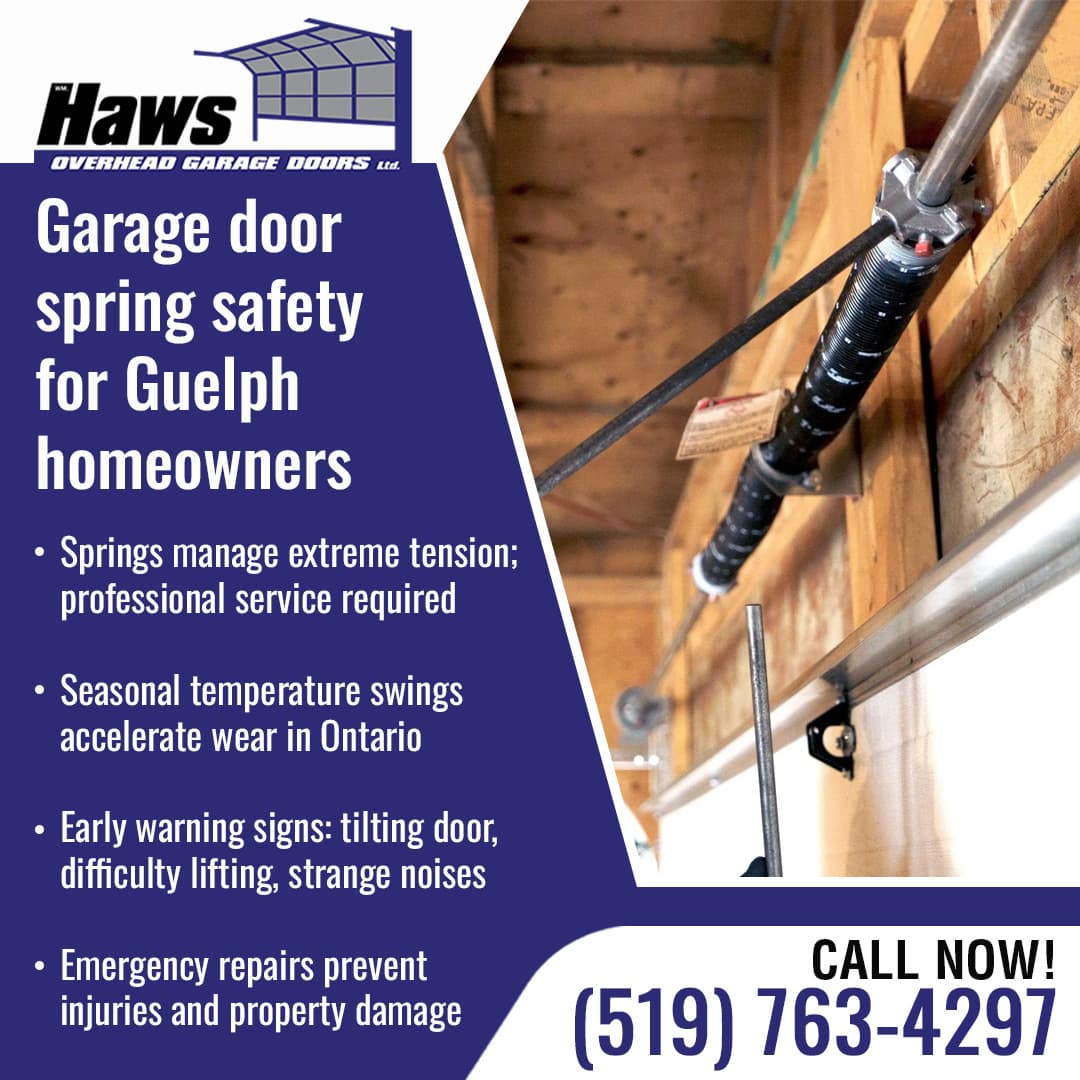
Choose Our Professional Garage Door Repairs
As a long-established service provider in Guelph, Ontario, we understand how important it is for homeowners to feel confident in the safety of their garage door system. Springs may not be visible during everyday use, but they play a critical role in the door’s stability and performance. When they weaken or fail, the risks increase quickly.
By recognizing early warning signs, following simple safety practices, and relying on trained professionals for garage door repair service, you can keep your garage door operating reliably in every season. Wm. Haws Overhead Garage Doors is committed to helping homeowners protect their families and prevent avoidable emergencies. If you have any concerns about your garage door springs, we’re here to help with safe, dependable service whenever you need it. To learn more about our services, contact us today at (519) 763-4297 or wmhawsdoors@bellnet.ca.