Every spring, homeowners across Ontario open their garage doors and notice something is off. Maybe the door stutters on the way up, grinds when it closes, or sits slightly crooked in its frame. Winter takes a quiet but serious toll on the moving parts of a garage door system. At Wm. Haws Overhead Garage Doors, we see this pattern every year without fail. It is a pattern we see consistently across Guelph, Elora, Fergus, and the Kincardine and Point Clark area every spring.
Cold temperatures, ice buildup, and freeze-thaw cycles put significant stress on rollers, hinges, springs, and cables. These components work together as a system, and when any one of them wears out or fails after a hard winter, the entire door suffers. Understanding what winter does to these parts and why timely professional garage door repair matters can save you from a costly breakdown.
What Winter Actually Does to Rollers and Hinges
Most garage door rollers are made of either steel or nylon. Both materials respond to cold temperatures, but in different ways. Steel rollers can develop micro-fractures over repeated freeze-thaw cycles, while nylon rollers become brittle and are more prone to cracking in sustained cold.
Hinges, typically made of galvanized steel, face their own challenge: lubricants thicken in the cold, which increases friction and causes accelerated wear on the hinge pin and bracket surfaces. When a hinge is forced to operate under that resistance hundreds of times through a winter, the metal fatigues faster than it would in moderate weather.
Research by the Insurance Institute for Business and Home Safety (IBHS) has identified improper installation and deferred maintenance as key contributors to garage door component failure. In a cold climate like Guelph, Ontario, that means each roller and hinge faces significant mechanical stress combined with temperature extremes across a single season.
Ice, Moisture, and Rust
Water intrusion is another major factor. When snow melts during a mid-winter thaw and then refreezes, moisture can work its way into roller tracks, hinge brackets, and around roller stems.
That trapped moisture leads to rust, which binds moving parts together and accelerates wear on contact surfaces.
By spring, rollers that looked fine in October may be pitted, misaligned, or running rough inside the track. Hinges may show surface rust, loose mounting hardware, or visible cracking around the bolt holes.
Signs Your Rollers or Hinges Need Attention
Catching wear early is always better than waiting for a failure. Here are the specific symptoms to watch for after winter:
Noisy Operation
A grinding, squeaking, or popping sound during door movement almost always points to worn or dry rollers. New rollers run quietly. When the bearings inside a roller wear out, or the roller stem becomes scored, it creates noise that gets progressively worse with each cycle.
Hinge-related noise tends to be a sharp creak or a rhythmic clicking that occurs at specific points as the door moves through its travel. This usually means the hinge pivot point is worn or the hardware has worked loose over winter.
Visible Wear or Damage
Do a visual inspection from inside the garage with the door closed. Look at each roller along the track, checking for cracks in the nylon (if applicable), rust on steel rollers, or rollers that sit unevenly in the track.
Hinges should lie flat against the door panels with no gaps or wobbles at the mounting bolts. A hinge that has shifted, bent, or shows cracking around the bolt holes is a hinge that needs replacement before it fails completely.
The Door Feels Heavy or Moves Unevenly
If you disengage the opener and try to lift the door manually, it should move smoothly with minimal resistance. A door that feels heavier than usual, or that wants to drift to one side, is telling you that friction in the roller-track system has increased. This extra load also stresses your opener motor, shortening its lifespan.
Other Components Winter Damages Beyond Rollers and Hinges
Rollers and hinges get the most visible wear, but they are rarely the only components affected by a Canadian winter. Two other parts of the system deserve attention every spring, and both are common drivers of post-winter garage door repair calls in Guelph and across Ontario.
Springs Under Pressure After a Cold Season
Cold temperatures and seasonal temperature swings can accelerate garage door spring fatigue, causing springs to lose tension or fail. Common signs include a heavier door, increased strain on the opener, and uneven operation. Because garage door springs store significant energy, replacement should always be handled by a trained professional.
Cables, Tracks, and Opener Strain
When springs weaken, cables and opener motors take on extra stress, increasing wear and the risk of failure. Winter conditions can also contribute to track misalignment, causing the door to bind or operate unevenly. A spring inspection should include the entire system to prevent recurring problems and unnecessary repairs. These are among the most common post-winter garage door repair calls we receive from homeowners in Guelph, Elora, Fergus, Kincardine, and Point Clark.
Why Professional Inspection Matters Here
There is a lot of garage door content online encouraging homeowners to handle roller and hinge replacements themselves. In straightforward cases, some of that advice is reasonable.
However, rollers and hinges do not operate in isolation. They are connected to the overall geometry of the door, the tension balance of the spring system, and the track alignment.
A worn roller on the bottom section can create a cascade effect that puts uneven stress on the
panels above it. A loose hinge that has shifted even slightly changes how the door panels articulate, which affects how evenly the springs load and release. A DIY fix that addresses the roller but misses the spring tension imbalance it caused will result in the same symptom reappearing within weeks, or escalate into a full spring or cable failure that requires emergency garage door repair. Getting a proper assessment ensures nothing is overlooked.
What a Professional Service Covers
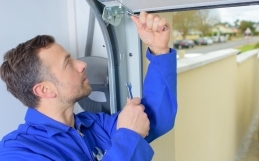
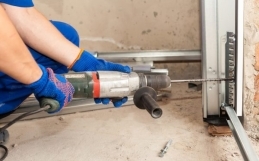
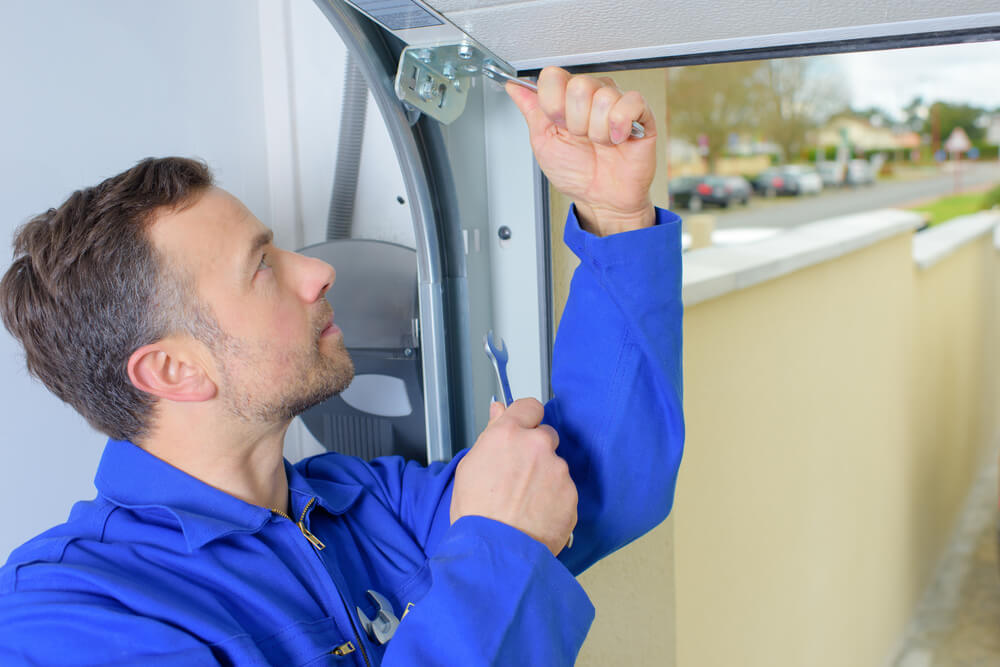
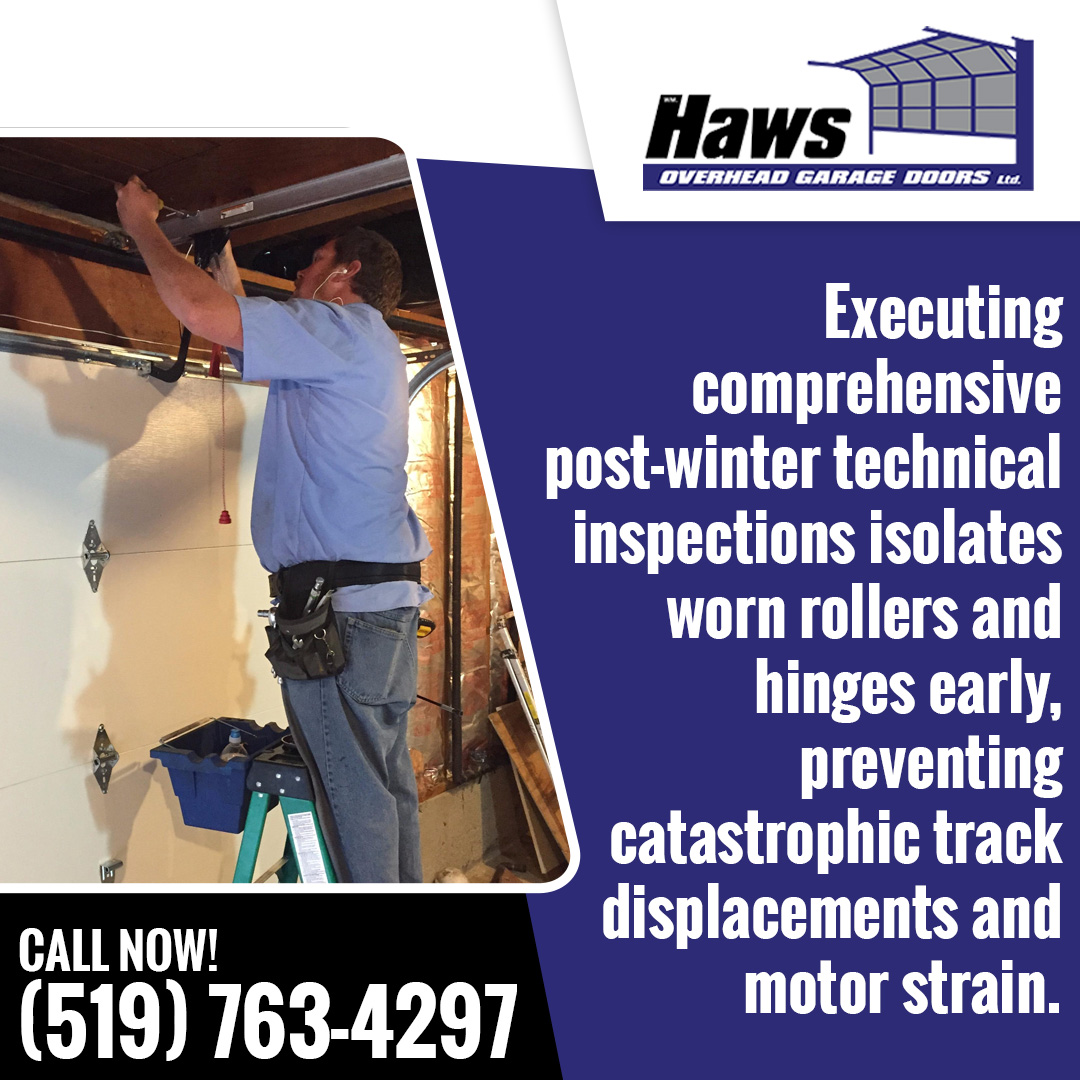
When our team at Wm. Haws Overhead Garage Doors performs a post-winter inspection and roller or hinge service; we go beyond swapping out the obvious parts. We check the full track system for alignment issues introduced by winter ground movement, verify that the door is balanced correctly before and after any component work, and inspect cable and spring condition to make sure the repaired rollers and hinges are not being asked to compensate for problems elsewhere.
We also carry out the kind of systematic lubrication that prolongs the life of new hardware, using lubricants appropriate for Ontario’s climate rather than general-purpose products that may not perform through the next winter.
When the Garage Door Will Not Open After Winter
Sometimes the post-winter inspection comes too late. A roller pops out of the track, or a hinge cracks entirely, and the door becomes stuck mid-travel or refuses to open at all.
This is a real inconvenience. If your vehicle is inside, you need prompt attention. Our garage door repairs in Guelph are designed for exactly this situation. We prioritize calls where the door is non-functional, and we work to restore safe operation the same day wherever possible.
If your door has stopped working and you suspect a roller or hinge failure, do not attempt to force it. Applying additional force to a stuck door with a failed component can cause panel buckling, cable damage, or track deformation that significantly increases the repair scope. Call for garage door repairs and let our team diagnose the problem safely.
Frequently Asked Questions
- How much does garage door roller repair cost in Ontario?
Garage door roller repair in Ontario typically costs between $100 and $250 for a standard residential door, depending on the extent of wear, the number of rollers affected, and whether related components such as hinges or tracks need attention during the same visit. Having a full system inspection carried out at the same time is the most cost-effective approach, since it avoids a second service call if a related issue surfaces shortly after.
- How often should garage door rollers be serviced?
Most garage door rollers perform reliably for several years under normal conditions, but Ontario’s climate shortens that timeline. Freeze-thaw cycles, lubricant breakdown in cold temperatures, and moisture intrusion all accelerate wear. A practical rule is to have rollers inspected every two to three years and serviced when visible wear, noise, or uneven door movement appears, rather than waiting for a complete failure that takes the door out of operation entirely.
- What are the signs that garage door rollers need repair?
The most common indicators are noise during operation, such as grinding, squeaking, or popping, a door that moves unevenly or feels heavier than usual when lifted manually, and visible damage such as cracked nylon, pitted steel, or rollers that sit unevenly inside the track. Rust on the roller stem or bracket is another reliable sign that wear has progressed beyond what lubrication alone can address.
- Can garage door roller repair be done the same day in Guelph?
In most cases, yes. Roller repair is one of the more straightforward garage door service calls, and most standard roller issues can be diagnosed and resolved in a single visit. Wm. Haws Overhead Garage Doors prioritizes same-day service for non-functional doors and aims to restore safe operation as quickly as possible for homeowners across Guelph and the surrounding communities.
Key Takeaways
- Rollers and hinges wear faster in cold climates. The freeze-thaw cycle, lubricant thickening, and moisture intrusion all contribute to accelerated wear across a single Ontario winter.
- Springs and cables are just as vulnerable. Cold temperatures alter spring tension, and cables that compensate for a weakened spring take on excess load, accelerating wear and increasing the risk of a full failure.
- Noise is your earliest warning. Grinding, squeaking, or clicking during door operation signals that rollers or hinges need inspection before the problem progresses.
- Visual checks take five minutes and matter. Look for cracked nylon, rust, shifted hinges, and loose mounting hardware at the start of every spring.
- Roller and hinge issues affect the whole system. What appears to be a small part problem often has a ripple effect on door balance, spring load, and opener performance.
- Prompt professional service prevents escalation. Catching wear in spring means replacing a few rollers or hinges. Waiting until failure can mean addressing track damage, panel buckling, and opener strain all at once.
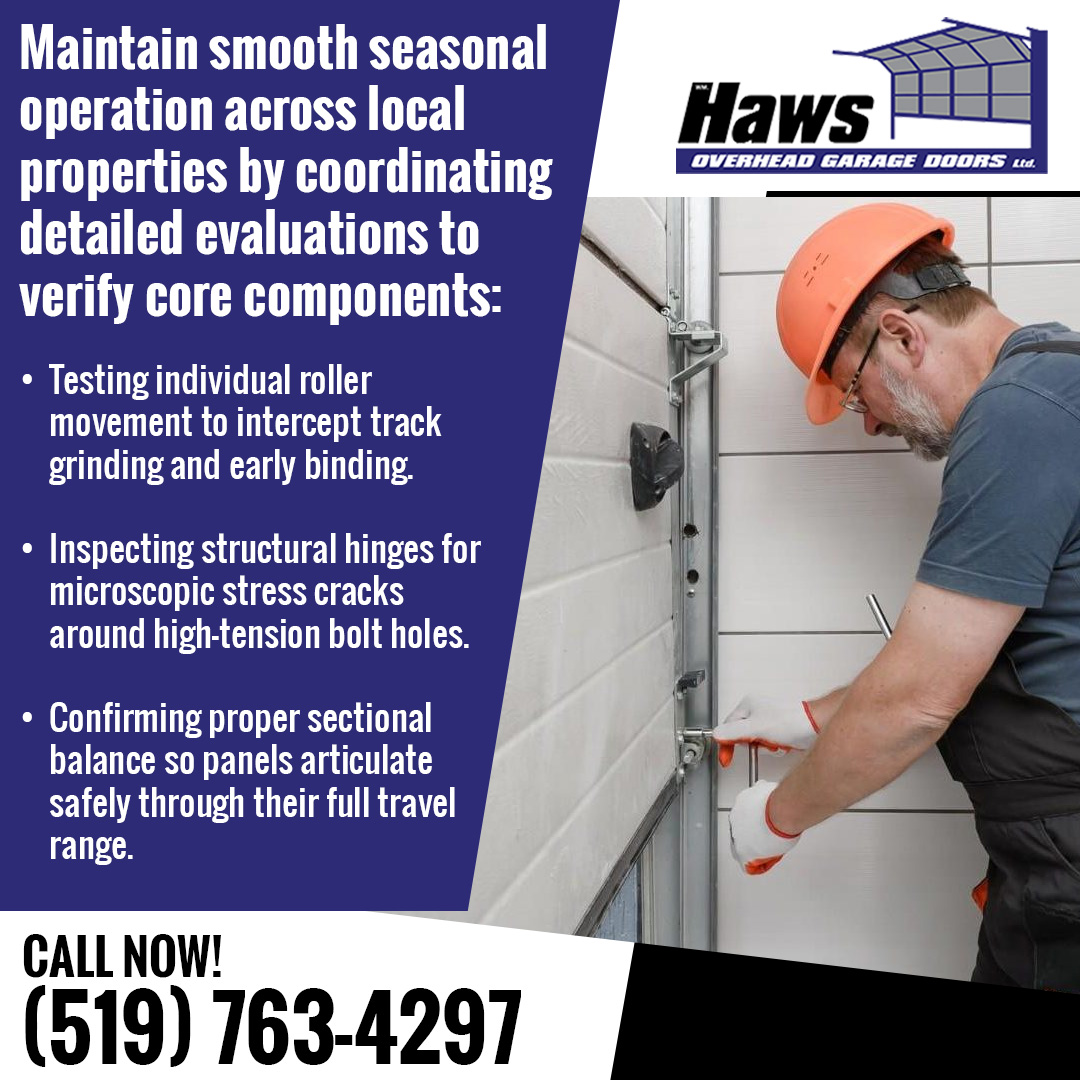
Time to Get Your Door Road-Ready for Spring
Rollers and hinges are not glamorous components, but they are the reason your door operates safely and reliably every single day. After a hard Ontario winter, they deserve attention.
Our team provides thorough post-winter assessments along with hinge and roller replacement, lubrication, and full system checks for homes and businesses in Guelph, Elora, Fergus, Kincardine, Point Clark, and across the surrounding region. Whether you need a routine inspection or are dealing with an urgent situation, Wm. Haws Overhead Garage Doors is ready to help.
Contact us today at (519) 763-4297 or wmhawsdoors@bellnet.ca to schedule your spring garage door repair service and go into the warmer months with confidence.