Most homeowners picture a quick swap: old door out, new door in, done in an hour. The reality of a professional garage door installation is far more involved, and understanding that process is exactly what helps you make a confident decision before calling anyone to your home.
Whether you are upgrading a worn-out door or outfitting a newly built home, knowing what to expect removes the guesswork. At Wm. Haws Overhead Garage Doors, we have been walking Guelph homeowners through this process since 1985. Here is a clear, step-by-step look at what actually happens from the moment we arrive to the moment we leave.
Research from the Insurance Institute for Business and Home Safety has identified improper installation as one of the leading contributors to garage door failure and subsequent structural damage, which is why every step in this process matters.
The Pre-Installation Assessment: Where the Work Really Begins
Before a single panel is unloaded from the truck, a skilled technician conducts a thorough site inspection. This step is often overlooked in conversations about garage door installation, but it is arguably the most critical phase of the job.
What Gets Evaluated
The technician checks the condition of the existing frame, header, and side jambs. Any rot, warping, or structural damage identified at this stage needs to be addressed before the new door goes in. Installing over a compromised frame is a leading cause of premature door failure and safety issues.
When a door fails through track displacement, panel buckling, or header dislocation, the resulting internal pressurization of the structure can place the entire home’s load-bearing capacity at risk. That is not a door problem. It is a whole-home structural problem that starts with a missed step during installation.
Spring system sizing is also confirmed during this visit. The torsion or extension springs must be matched precisely to the door’s weight. An improperly matched spring places undue stress on the opener and cables, shortening the lifespan of the entire system.
Measurements are taken and cross-checked against the ordered door specifications. Even a small discrepancy in headroom, sideroom, or backroom clearance can require adjustments before installation can proceed.
Removing the Old Door Safely
Removing an existing door is not simply a matter of unscrewing a few bolts. Springs under tension store significant mechanical energy and must be released in a controlled, sequential process. Our technicians are trained specifically for this, and it is one of the clearest reasons why attempting a DIY removal can be genuinely dangerous.
The Disassembly Sequence
The opener is disconnected first. Then the springs are carefully unwound and the tension fully released before any hardware is touched. Panels are removed from the top down, and all tracks, brackets, and hardware are taken off and set aside or disposed of, depending on their condition.
If any components, such as hinges, rollers, or sections, are still serviceable, we note that for the homeowner. Reusing components is only recommended when they meet the specifications of the new door; however, that determination is always made by the technician on site.
The Installation Process, Step by Step
With the old door cleared and the opening verified, the actual installation begins. This is a precise, methodical process that follows a defined sequence to ensure the door operates correctly and safely from day one.
Track and Hardware Setup
The vertical and horizontal tracks are installed first, anchored securely to the framing. Track alignment is checked with a level at multiple points. Even a slight misalignment at this stage leads to binding, uneven wear, and premature roller failure down the road. This is true whether we are completing a garage door installation in Guelph or serving homeowners in Kincardine and the surrounding lakeshore communities
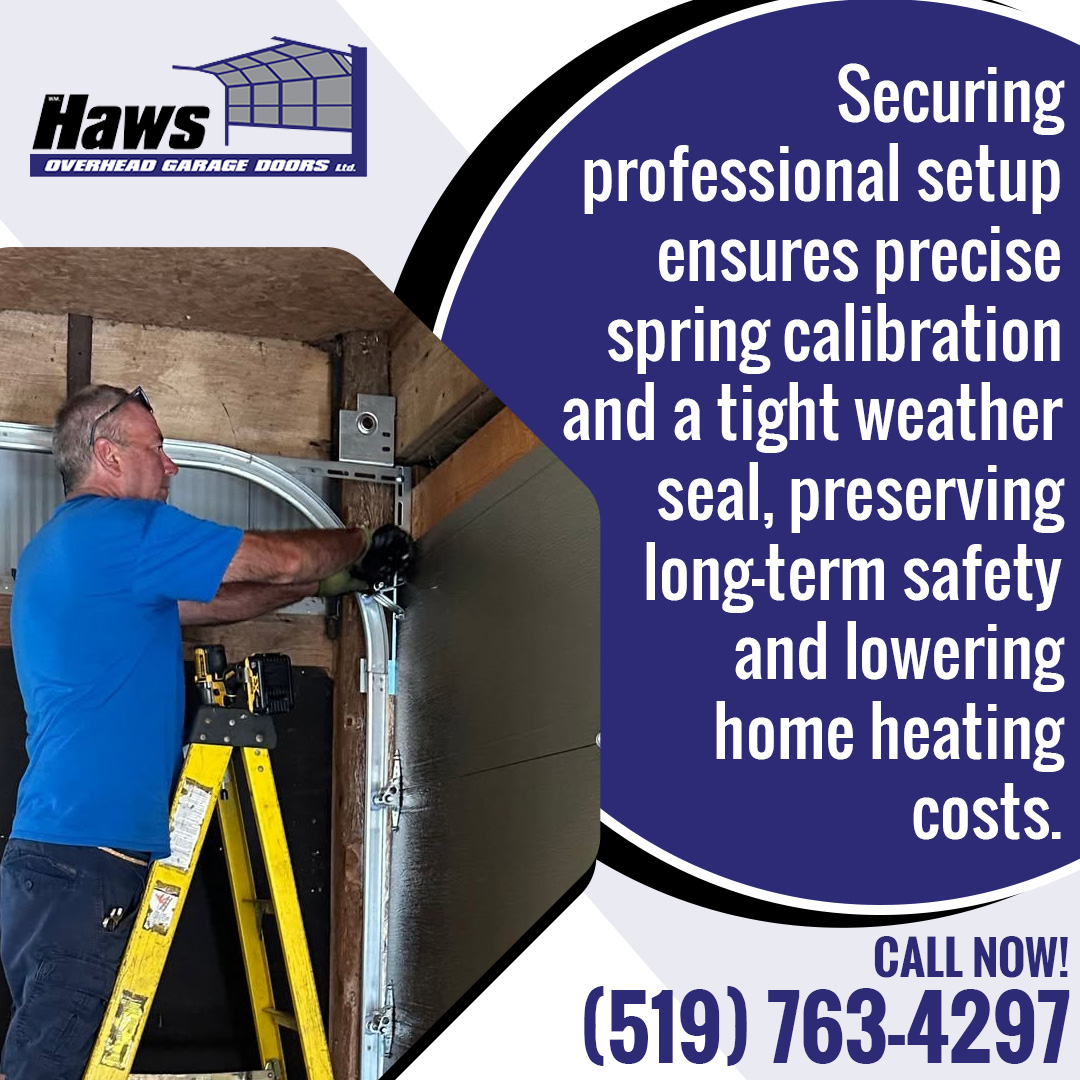
Bottom brackets, cable drums, and the torsion bar assembly are installed next. The spring is mounted and wound to the correct tension based on the door’s calculated weight. This winding requires specific tools and training; it is not a step that should ever be improvised.
Panel Installation
Panels are installed from the bottom up, with each section checked for level and plumb alignment before the next goes on. Hinges connecting adjacent panels are torqued to spec. Rollers are inserted into the track as each panel is added, and the door is tested for smooth manual operation before the opener is connected.
At Wm. Haws Overhead Garage Doors, we use trusted brand-name products throughout, which means hardware tolerances are consistent and reliable. This matters more than many homeowners realize. Mixing hardware brands often leads to fit issues that cause noise, binding, and shortened component life.
Opener and Safety System Integration
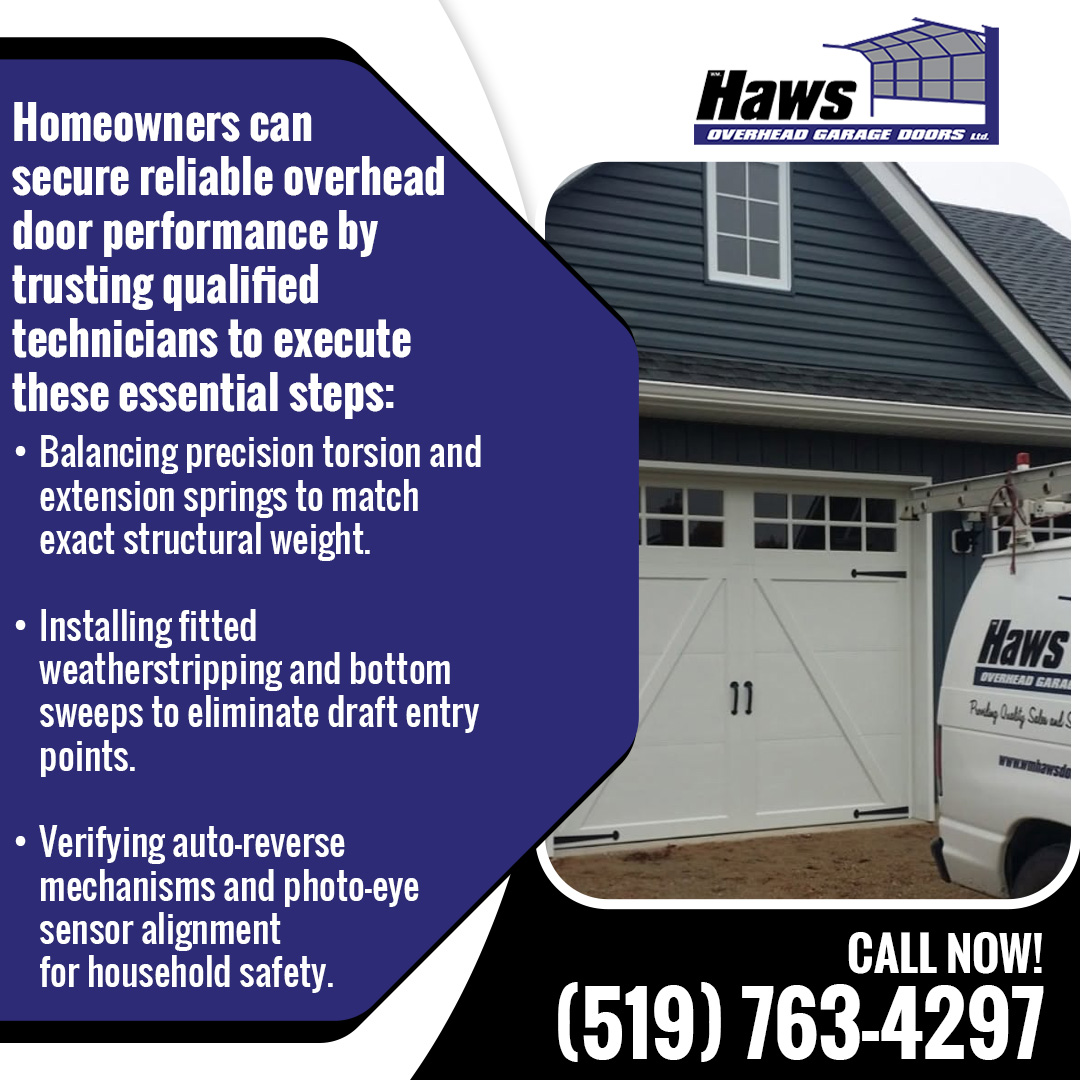
Once the door operates smoothly by hand, the opener is mounted and connected. Force settings are calibrated so the door reverses properly if it meets resistance, which is a critical safety function. The photo-eye sensors are aligned and tested, and the auto-reverse mechanism is verified with a physical obstruction test.
For those interested in smart home connectivity, we also offer garage door installation service of the LiftMaster MyQ system, which allows you to monitor and control your garage door remotely from an Android or iPhone. This is a popular addition for homeowners who want the convenience of remote access without adding a separate smart device.
Final Checks and the Walk-Through You Should Expect
A garage door installation does not end when the last bolt is tightened. The final phase is a thorough check of every system, followed by a proper walk-through with the homeowner.
What the Final Inspection Covers
Spring tension and balance: The door is disconnected from the opener and tested for balance. A well-balanced door should stay in place when raised to the halfway point and released. If it drops or rises on its own, the spring tension requires adjustment.
- Cable condition and seating: Cables are checked for proper seating on the drums and for any signs of fraying.
- Weather seal installation: Bottom seals and, where applicable, side and top weatherstripping are fitted and checked for full contact with the floor and frame.
- Opener limits and travel: The opener’s open and close limits are set so the door fully seals at the bottom and does not over-travel at the top.
After the inspection, our team walks you through the operation of the opener, explains the safety features, and answers any questions you have. We also discuss our annual and semi-annual preventative maintenance programs, which are designed to catch small issues before they become costly repairs.
What Makes Residential Garage Door Installation Different in Guelph
Local conditions matter more than many homeowners expect. Guelph winters bring significant temperature swings, ice, and road salt exposure that affect everything from spring performance to panel finish longevity. This is why material selection and proper sealing are particularly important for garage door installations in Guelph, Ontario.
We work with products built to withstand these conditions, and we factor local climate considerations into every recommendation we make. A door that performs well in a mild climate may underperform significantly in a Guelph winter if the sealing and insulation specifications are not appropriate.
Our second location in Point Clark also means we bring this same level of expertise to the Kincardine area and surrounding lakeshore communities, where wind exposure adds another variable to consider.
Frequently Asked Questions About Garage Door Installation
- How long does a garage door installation take?
A standard residential garage door installation typically takes between three and five hours from arrival to completion. That window accounts for the pre-installation assessment, safe removal of the existing door, full hardware and track setup, panel installation, opener integration, and final safety testing. More complex jobs involving structural frame repairs, custom sizing, or smart opener integration may require additional time.
- How much does garage door installation cost in Guelph?
Garage door installation costs in Guelph vary depending on door size, material, insulation rating, and opener type. A standard single-car door installation generally falls between $800 and $1,500, while a double-car door with insulation and a new opener can range from $1,500 to $3,000 or more. The most accurate way to understand your specific cost is to request an on-site assessment, since frame condition and clearance requirements affect the final scope.
- Do I need a permit for garage door installation in Ontario?
In most cases, a straightforward door replacement does not require a building permit in Ontario. However, if the project involves structural changes to the garage opening, widening the frame, or modifying load-bearing elements, a permit may be required. A professional technician can flag any scope that falls outside a standard swap during the pre-installation assessment.
- What type of garage door is best for Guelph’s climate?
Insulated steel doors are generally the best fit for Guelph’s climate. They handle temperature swings well, resist warping, and provide a thermal barrier that helps regulate garage temperature through both winter and summer. The insulation rating, measured as an R-value, should be matched to how the garage is used. An attached, heated garage warrants a higher R-value than a detached structure used primarily for storage.
- Can garage door installation be completed the same day?
In most standard residential installations, yes. Wm. Haws Overhead Garage Doors carries trusted brand-name products and aims to complete installations in a single visit wherever the scope allows. Same-day completion depends on door availability, frame condition, and whether any preparatory repairs are needed before the new door can go in.
Key Takeaways
- The pre-installation assessment is not optional. Skipping it risks installing over a compromised frame, which shortens the life of the entire door system.
- Spring work requires professional handling. Torsion springs store significant mechanical energy. Releasing or winding them incorrectly is one of the most common causes of serious garage door injury.
- Hardware compatibility matters. Mixing brands or reusing worn components often leads to noise, binding, and premature failure, even on a new door.
- Safety system testing is part of every professional installation. Auto-reverse and photo-eye functions must be tested and confirmed before the job is considered complete.
- Maintenance extends your investment. An annual check of springs, cables, rollers, and balance catches issues early and keeps your door operating safely for years.
Choose Professional Garage Door Installation Services
A garage door installation service done right is an investment that pays off in security, curb appeal, and daily reliability for years to come. The process involves considerably more than swapping panels, and it deserves the attention of experienced hands.
Wm. Haws Overhead Garage Doors has served the Guelph community for over four decades, earning nine Reader’s Choice Awards from the Guelph Tribune, including six consecutive years at number one. Our team brings that same expertise and care to every installation we complete.
If you are planning a new door for your home or have questions about what the process involves, contact us today at (519) 763-4297 or wmhawsdoors@bellnet.ca. We are happy to walk you through your options and provide a clear, honest evaluation of what your project requires.