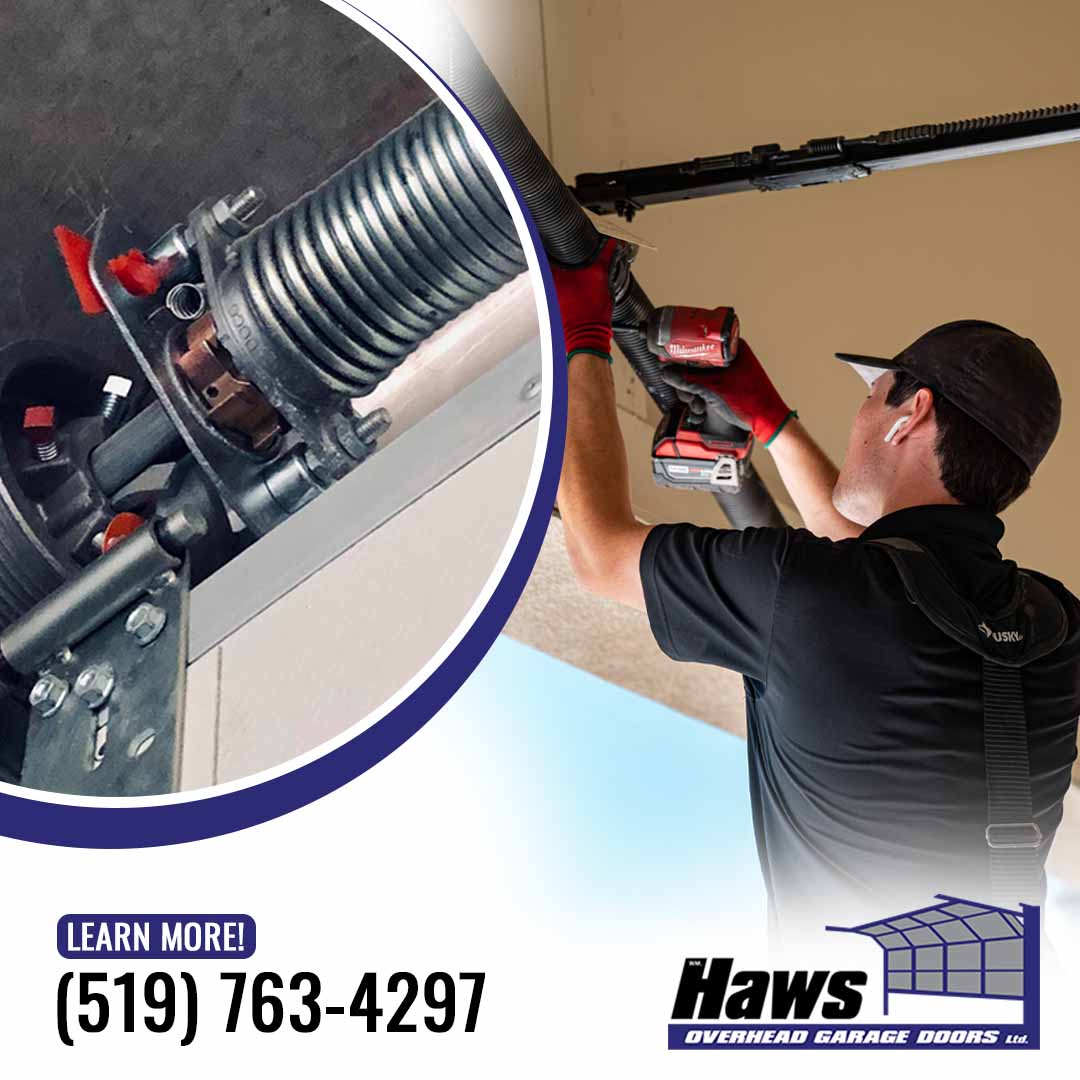
Identify broken garage door springs by watching for visible gaps in steel coils, loud snapping noises, loose cables, or a door that feels extremely heavy. Catching spring fatigue early stops sudden door drops and severe opener motor damage. Contact a trained technician from Wm. Haws Overhead Garage Doors to perform garage door repair in Guelph, Ontario, and replace high-tension springs safely before operating the door again.
Key Points to Note:
- Visible Coil Gaps: A visible gap, stretching, or other damage in a garage-door torsion spring can indicate a spring problem.
- Heavy Manual Lifting: A door with a failing spring loses counterbalance, making a 150-pound door feel like dead weight.
- Cable Disconnection: Slack or completely unwound cables signal that spring tension maintaining drum alignment has failed.
How Do You Tell If a Garage Door Spring Is About to Break?
Spotting spring fatigue before a complete snap requires inspecting hardware visually and monitoring opening performance. Heavy-duty springs hold constant mechanical tension to counterbalance door weight. As the steel in a garage-door spring wears from repeated use, specific warning signs may begin to appear.
What Are the Physical Warning Signs of Spring Wear?
Regular visual checks reveal early signs of metal fatigue along the torsion shaft or side-mounted extension tracks.
- Coil Separation: Torsion springs split into two distinct pieces when they break, leaving a noticeable gap between coils.
- Elongated Extension Springs: Extension springs running along upper horizontal tracks stretch out and lose original coil tightness.
- Squeaking and Friction Noise: While squeaking often just points to dry rollers, hinges, or springs needing lubrication, persistent friction or harsh grinding during operation can indicate binding coils, track misalignment, or early mechanical wear that warrants professional inspection.
Timely garage door repair can address these issues before a weakened spring fails unexpectedly.
What Are Operational Indicators During Door Movement?
Spring failure directly impacts how smoothly the garage door moves along its tracks.
- Fast Closing Speed: The door drops rapidly during the final two feet of downward travel because the spring no longer controls descent weight.
- Jerky Opening Motion: The door rises unevenly or jerks along tracks as the opener struggles to lift the unassisted load.
- Crooked Door Panel Position: One side of the door hangs lower than the other when opening, indicating an unbalanced spring assembly.
What Are the Warning Signs of a Broken Garage Door Torsion Spring?
A broken torsion spring manifests through sudden mechanical failures that stop the door from lifting entirely. Torsion systems sit on a metal shaft directly above the garage door opening. When the coil snaps, kinetic energy releases instantly, creating a loud noise inside the garage.
Counterbalance systems use steel torsion or extension springs to neutralize door weight, allowing a residential garage door opener to lift heavy panels smoothly.
| Spring Failure Sign | Visual or Auditory Indicator | Immediate Operational Impact |
| Coil Gap | Noticeable gap in the top spring | Opener motor hums but cannot lift door |
| Loose Lift Cables | Cable dangling off side drum | Door hangs crookedly and binds in tracks |
| Top Panel Bending | Arm bracket pulls on top section | Opener rail bows under heavy stress |
How Common Are Garage Door Component Injuries?
As the International Association of Certified Home Inspectors (InterNACHI) points out, garage doors are typically among the heaviest moving objects in a home and operate under high mechanical tension. Everyday hazards, most commonly pinched or crushed fingers caught in moving panels, hinges, and rollers, frequently lead to emergency room visits. However, the most severe dangers arise from the counterbalance system itself: attempting to adjust or repair springs without professional training risks sudden, forceful breakage that can propel loose hardware through the garage and cause serious or fatal injury.
Why Should You Avoid Opening a Garage Door with a Broken Spring?
Opening a garage door with a broken spring risks snapping lift cables, bending horizontal tracks, and destroying electric opener drive gears. Automatic openers push and pull balanced doors rather than lifting 150 to 300 pounds of dead weight.
What Steps Should You Take When You Suspect a Broken Spring?
When a spring fails, taking immediate steps protects property and household members from injury.
- Disconnect the Automatic Opener: Pull the red emergency release cord only when the door is fully closed to prevent it from slamming down.
- Avoid Manual Lifting: Keep the door closed and do not force it open manually, as full weight causes severe muscle strain or crush injuries.
- Call for Professional Repair: Contact trained technicians in garage door repair who carry calibrated replacement springs and specialized winding tools.
Homeowners count on Wm. Haws Overhead Garage Doors for reliable garage door repair in Ontario.
Contact Us for Garage Door Repair in Guelph, Ontario
Our experienced technicians complete safety checks on every jobsite. Wm. Haws Overhead Garage Doors Ltd. delivers reliable solutions across Southwestern Ontario, including Guelph, Cambridge, Fergus, Rockwood, Kincardine, Goderich, Tiverton, Lucknow, Wingham, and nearby areas.
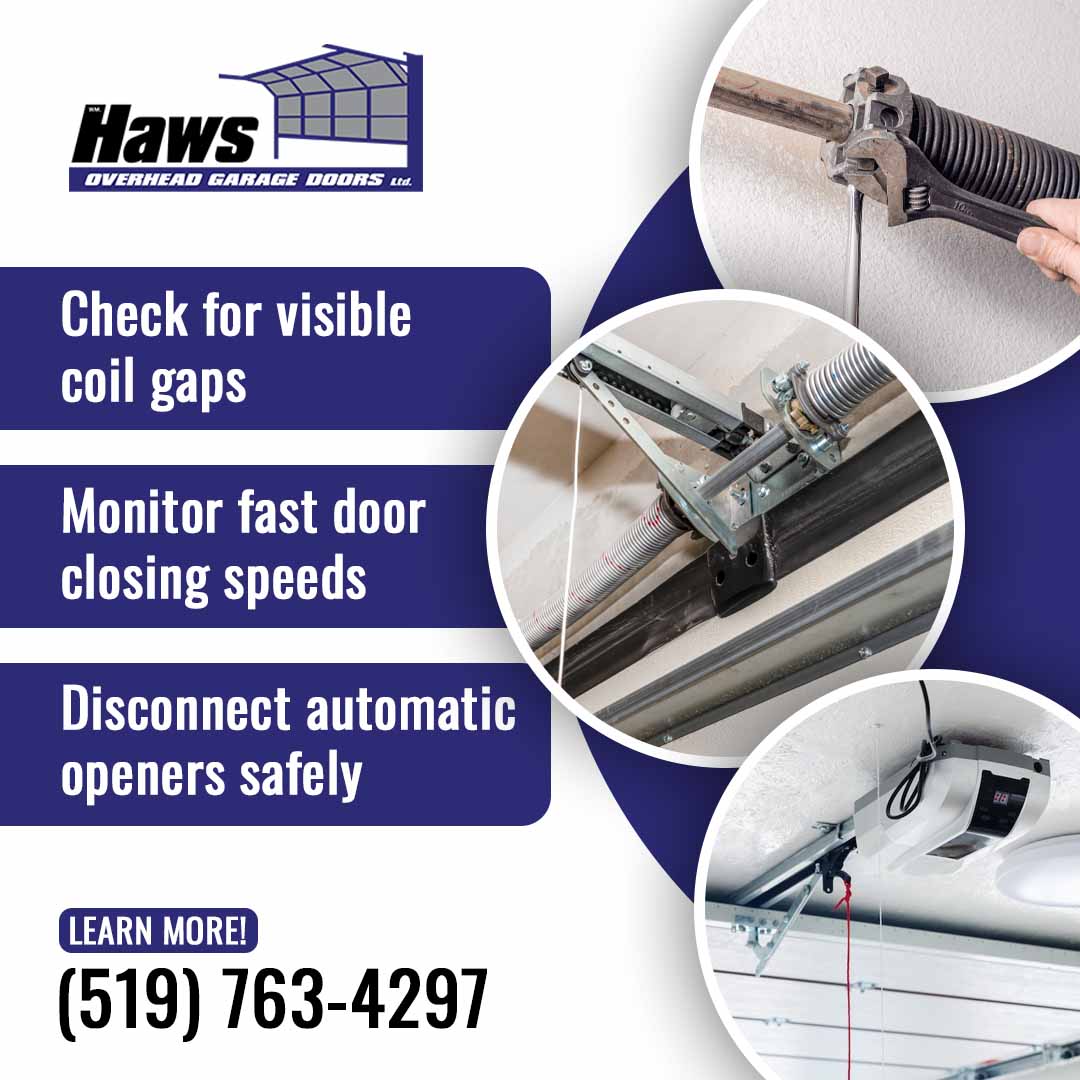 Call our team today at (519) 763-4297 or email wmhawsdoors@bellnet.ca to request immediate spring service or schedule a safety inspection.