A noisy garage door is one of the most common concerns homeowners raise, yet it is often misunderstood. Many assume sounds are harmless quirks of an aging system, while others worry that a sudden failure is imminent. The reality usually falls somewhere in between from our experience providing garage door repair at Wm. Haws Overhead Garage Doors; noise is rarely random. It is a signal that something within the system is shifting, wearing down, or working harder than it should.
Across Ontario, seasonal temperature swings, daily use, and gradual component fatigue all contribute to changes in how a garage door sounds during operation. This guide explains what those noises typically mean, which issues require prompt attention, and how homeowners can reduce risk through informed decisions rather than guesswork.
Key Takeaways
- Garage door noise is rarely random and usually signals gradual wear, alignment shifts, or increased mechanical strain within the system.
- Different sounds point to other issues, with squeaking, rattling, and grinding each indicating specific component problems that should not be ignored.
- Noise combined with uneven movement or hesitation often suggests a safety or access risk that requires prompt professional assessment.
- DIY adjustments may reduce sound temporarily, but improper changes frequently worsen balance issues and lead to more extensive repairs.
- Routine inspections and preventive maintenance remain the most effective way to reduce noise, extend component lifespan, and avoid unexpected garage door failures.

Why Garage Doors Become Noisy Over Time
Garage doors are large mechanical systems that rely on precise balance and alignment. Each opening cycle places stress on springs, rollers, cables, hinges, and the opener itself. Over thousands of cycles, even small changes in tension or alignment can produce noticeable noise.
During garage door repair in Ontario, we often find that the sound increases gradually. Homeowners may not notice until the noise becomes disruptive. Noise is often the earliest visible symptom of that wear.
Environmental Stress and Daily Use
Cold temperatures cause metal components to contract, while warmer conditions allow them to expand. These shifts loosen fasteners and alter track alignment. Humidity also plays a role by affecting lubrication and accelerating corrosion. Over time, these environmental factors change how smoothly components interact.
Daily usage compounds the issue. A garage door used multiple times per day experiences more roller friction and spring fatigue than a door opened occasionally. Noise increases as parts lose their original tolerances.
Understanding What Different Garage Door Noises Indicate
Not all sounds signal the same level of concern. Identifying the type of noise helps determine whether monitoring is sufficient or professional attention is necessary.
Squeaking or Chirping During Movement
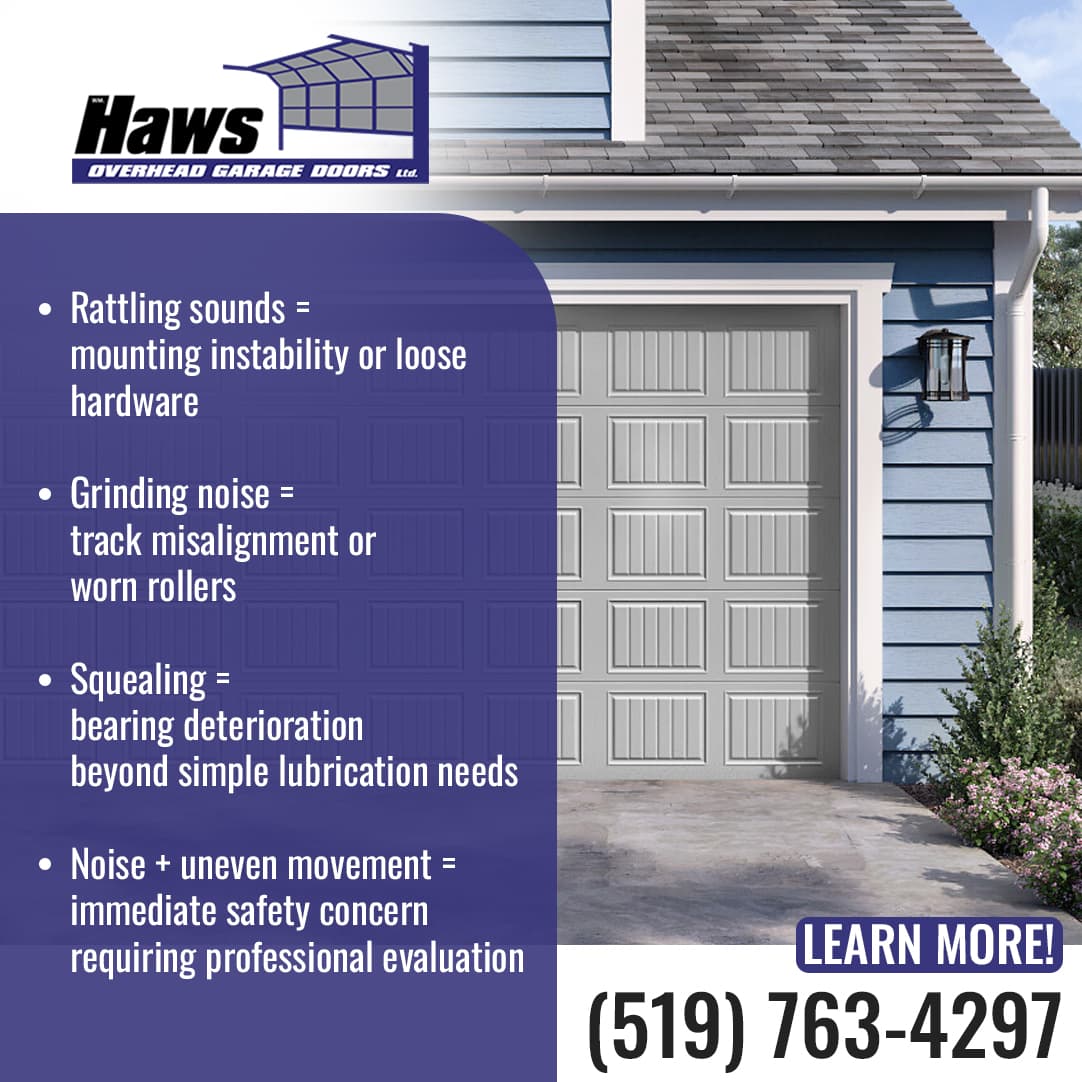
High-pitched squeaks usually point to dry hinges or rollers. While lubrication can temporarily reduce noise, repeated squeaking often indicates bearing wear. In many professional garage door repairs we perform, worn rollers are the underlying cause rather than a lack of lubricant.
Ignoring this sound allows friction to increase, which accelerates track wear and affects door balance.
Rattling or Vibrating Noises
Rattling often comes from loose hardware. Bolts securing tracks to the wall can loosen gradually due to vibration. This noise may seem minor, but loose tracks shift under load, placing uneven stress on rollers and cables.
We frequently encounter this issue during garage door repairs in Guelph, Ontario, particularly in older homes where mounting points have settled over time.
Grinding or Scraping Sounds
Grinding noises are more serious. They usually indicate rollers dragging against misaligned tracks or internal opener gear wear. The Consumer Product Safety Commission notes that mechanical wear is a leading factor in garage door–related injuries, many of which were preceded by abnormal sounds.
Continued operation under these conditions increases the risk of sudden component failure.
When Noise Signals a Safety or Access Issue
Noise becomes urgent when it is paired with irregular movement. If a door hesitates, jerks, or stops mid-cycle, the issue may involve springs or cables under tension. These components are designed to counterbalance the door’s weight and are critical to safe operation.
In colder months across Ontario, we receive frequent calls from homeowners whose doors become louder and less responsive at the same time. This combination often indicates increased strain on the system.
Situations That Require Immediate Attention
If the door will not open fully, closes unevenly, or produces loud bangs, a professional assessment is essential. Homeowners in Guelph, Ontario often reach out to Wm. Haws Overhead Garage Doors during these moments because vehicle access is compromised. In such cases, emergency garage door repair helps prevent further damage and restores safe operation.
For those needing emergency garage door repairs in Guelph, fast response matters because forcing a malfunctioning door can damage the opener, bend tracks, or cause cables to fail entirely.
Why Noise Often Worsens After DIY Adjustments
Many homeowners attempt to quiet a noisy door through online advice or trial-and-error adjustments. While basic lubrication is generally safe, altering spring tension or track alignment without proper tools often creates new problems.
During garage door repair, we regularly correct systems that have become noisier after well-meaning adjustments. A door may sound quieter briefly but become unbalanced, transferring stress to the opener or cables.
The Risk of Unbalanced Systems
A properly balanced door should stay in place when lifted halfway. If it drops or rises quickly, the tension is incorrect. Operating an unbalanced door increases motor strain and shortens the opener’s lifespan.
Professional technicians use calibrated instruments to measure tension and alignment accurately. This approach reduces noise while maintaining system safety.
How Preventive Maintenance Reduces Noise Long Term
Routine maintenance is one of the most effective ways to control noise and extend system life. Preventive care focuses on early detection rather than reactive fixes. Because early warning signs (like new grinding or sticking) can indicate a safety issue, the U.S. Consumer Product Safety Commission recommends inspecting the garage door and opener every 30 days and testing the opener’s reverse function with a 2×4. If the door binds, sticks, or doesn’t reverse properly, it should be serviced by a professional.
During maintenance visits related to garage door repair in Ontario, we inspect roller condition, tighten hardware, assess cable wear, and test opener force settings. These steps reduce friction points that create noise.
Real-World Impact of Maintenance
One homeowner in Ontario contacted Wm. Haws Overhead Garage Doors after months of increasing rattling. Inspection revealed loose track brackets and flattened rollers. Addressing those issues restored quiet operation and prevented a track failure that would have immobilized the door.
Why Professional Diagnosis Protects Long-Term Performance
Garage doors are engineered systems. Changing one component affects the entire assembly. Professional diagnosis considers how each part interacts under load rather than treating symptoms in isolation.
In our experience at Wm. Haws Overhead Garage Doors, noise complaints often uncover underlying issues that homeowners were unaware of. Addressing those issues early reduces repair costs and improves reliability.
Tools, Training, and System Knowledge
Professional technicians rely on specialized tools and manufacturer guidelines. This ensures adjustments reduce noise without compromising safety. It also helps preserve warranties on doors and openers.
Attempting repairs without this context may silence noise temporarily, but it often leads to larger issues later.
When to Schedule Service Instead of Waiting
Noise that persists for more than a few weeks should be evaluated. Waiting rarely resolves the issue on its own. Instead, components continue to wear until failure occurs. For homeowners in Guelph, Ontario, seasonal inspections are especially valuable before winter.
Cold temperatures amplify existing weaknesses, making noisy systems more vulnerable to sudden breakdowns.
Whether the concern is convenience or safety, timely service reduces uncertainty and restores predictable operation.
Choose Professional Garage Door Repairs In Guelph, Ontario
Garage door noise is not just an annoyance. It is a message from the system that something has changed. Knowing what different sounds mean allows homeowners to respond appropriately rather than guessing.
From minor lubrication needs to situations requiring professional attention, early action prevents escalation. At Wm. Haws Overhead Garage Doors, we approach noise-related concerns with a focus on safety, system balance, and long-term reliability. If your garage door has become louder or less consistent, addressing it now can prevent larger disruptions later. Contact us today at (519) 763-4297 or wmhawsdoors@bellnet.ca to learn more about our garage door repair services in Guelph, Ontario.